service design · user research · facilitation service design · ricerca utente · facilitazione
consult consulenza
user research · service design · government ricerca utente · service design · governo
researching and
mapping
data workflows
capire come
lavorano davvero
gli analisti
A key challenge in today's public sector organisations is around data storage, interoperability and discoverability. Different teams store data on different platforms, making it hard to know what data exists and where. Within this context, I supported a government team developing a Databricks platform as a solution for data storage and data transformation.
The team needed to understand how data practitioners (economists, analysts, engineers, scientists, operational/social researchers) actually worked: what tools they used, where the friction was, and where an emerging technology like Databricks might genuinely add value — rather than simply replace what was already there.
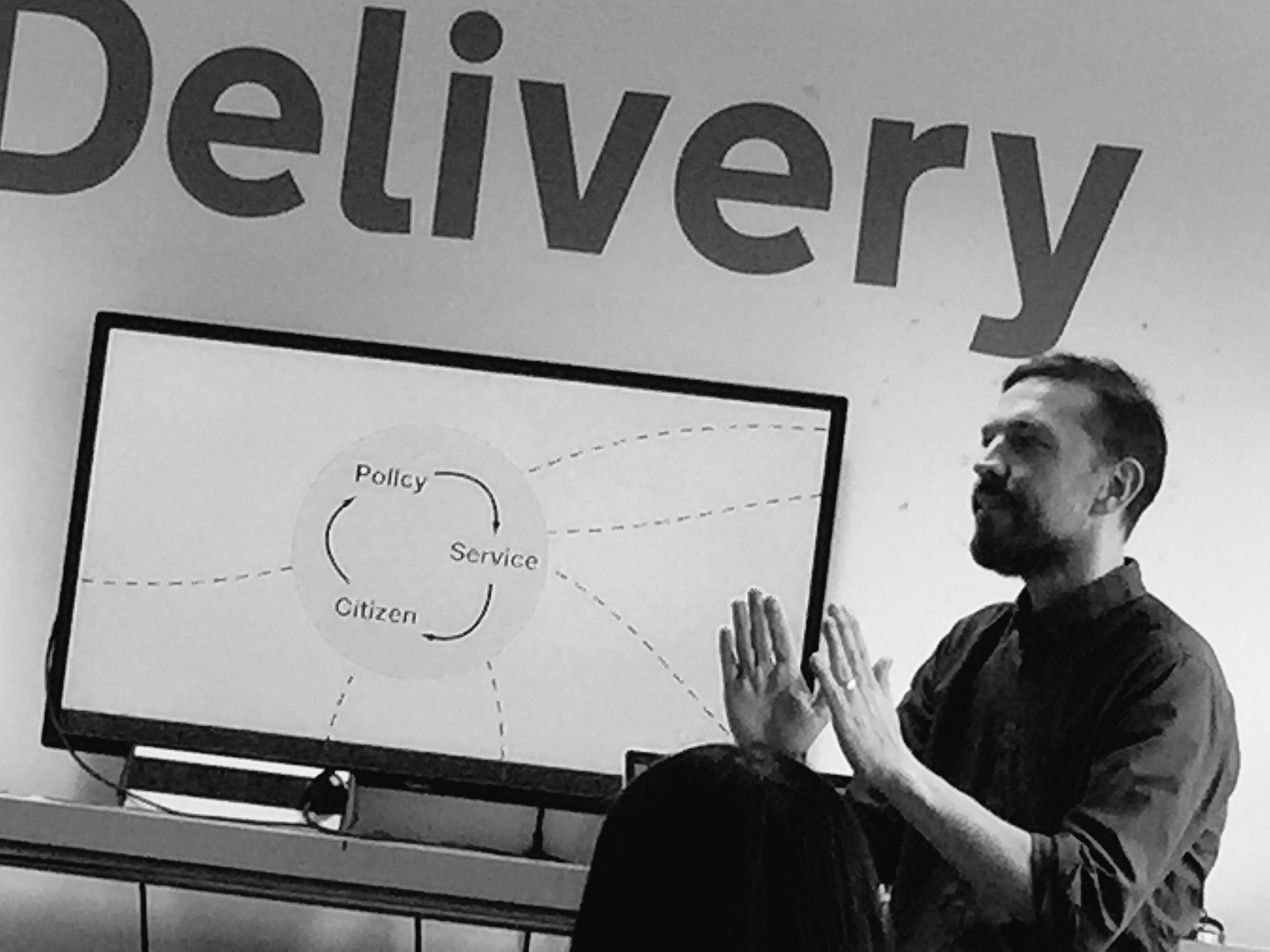
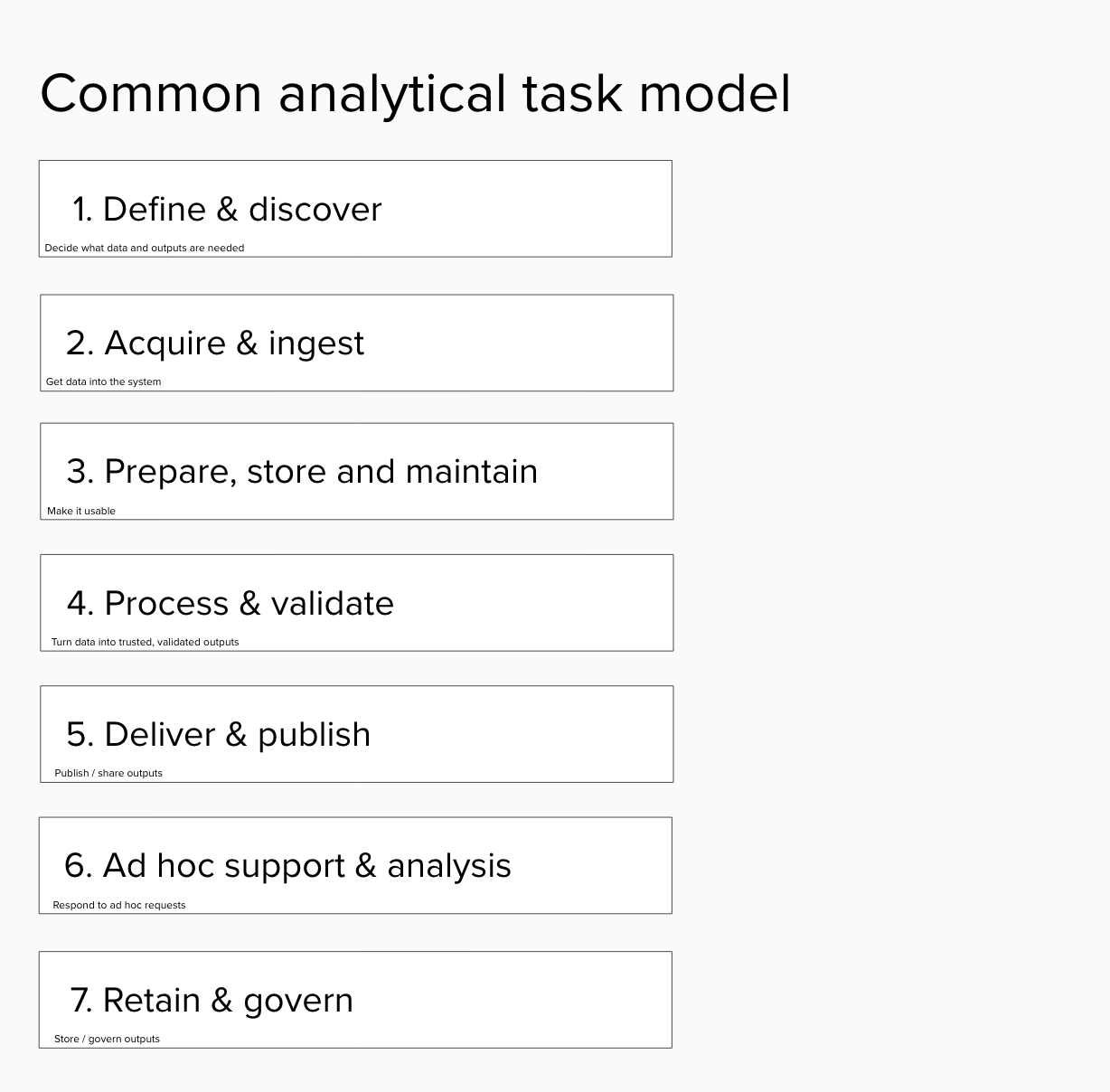
I conducted around forty semi-structured interviews with analysts, data engineers and researchers across the department. Each interview produced a structured need card capturing the person's tools, workflow, domain and the thing they most needed from a shared platform. I ran card sorting sessions to group and prioritise the needs across the analyst community, and requirements workshops with technical leads to map existing workflows. I employed different techniques for consolidating the user research, including Emily Webber's Team Onion and the development of a common task model template so that different workflows could be compared in a consistent manner. The work informed the development of a common data strategy within the Department.
Il Ministry of Homes, Communities and Local Government stava sviluppando una piattaforma dati comune — un ambiente Databricks condiviso per rendere i dati accessibili tra team che in precedenza lavoravano in silos.
Prima di qualsiasi decisione sulla piattaforma, il team aveva bisogno di capire come lavorano davvero i data practitioner: quali strumenti usano, dove si trovano le frizioni e dove una tecnologia emergente come Databricks potrebbe aggiungere valore reale.
Ho condotto circa quaranta interviste semi-strutturate con analisti, data engineer e ricercatori del dipartimento. Ogni intervista ha prodotto una scheda di bisogno strutturata che catturava gli strumenti, il flusso di lavoro e il dominio della persona. Ho facilitato sessioni di card sorting per raggruppare e prioritizzare i bisogni, e workshop sui requisiti con i lead tecnici per mappare cosa Databricks poteva e non poteva ancora fare.
La ricerca ha fornito al team un quadro concreto del panorama analitico — e una comprensione più chiara di dove costruire, dove attendere e dove ascoltare di più.
service design · facilitation · european commission service design · facilitazione · commissione europea
making evidence
transparent
rendere leggibili
le evidenze
The European Commission Joint Research Centre was piloting a new approach to evidence transparency — making the evidence behind Commission decisions more open, structured and accessible. The challenge was as much organisational as technical: how do you align a distributed group of researchers, policy specialists and technical staff around a shared way of working?
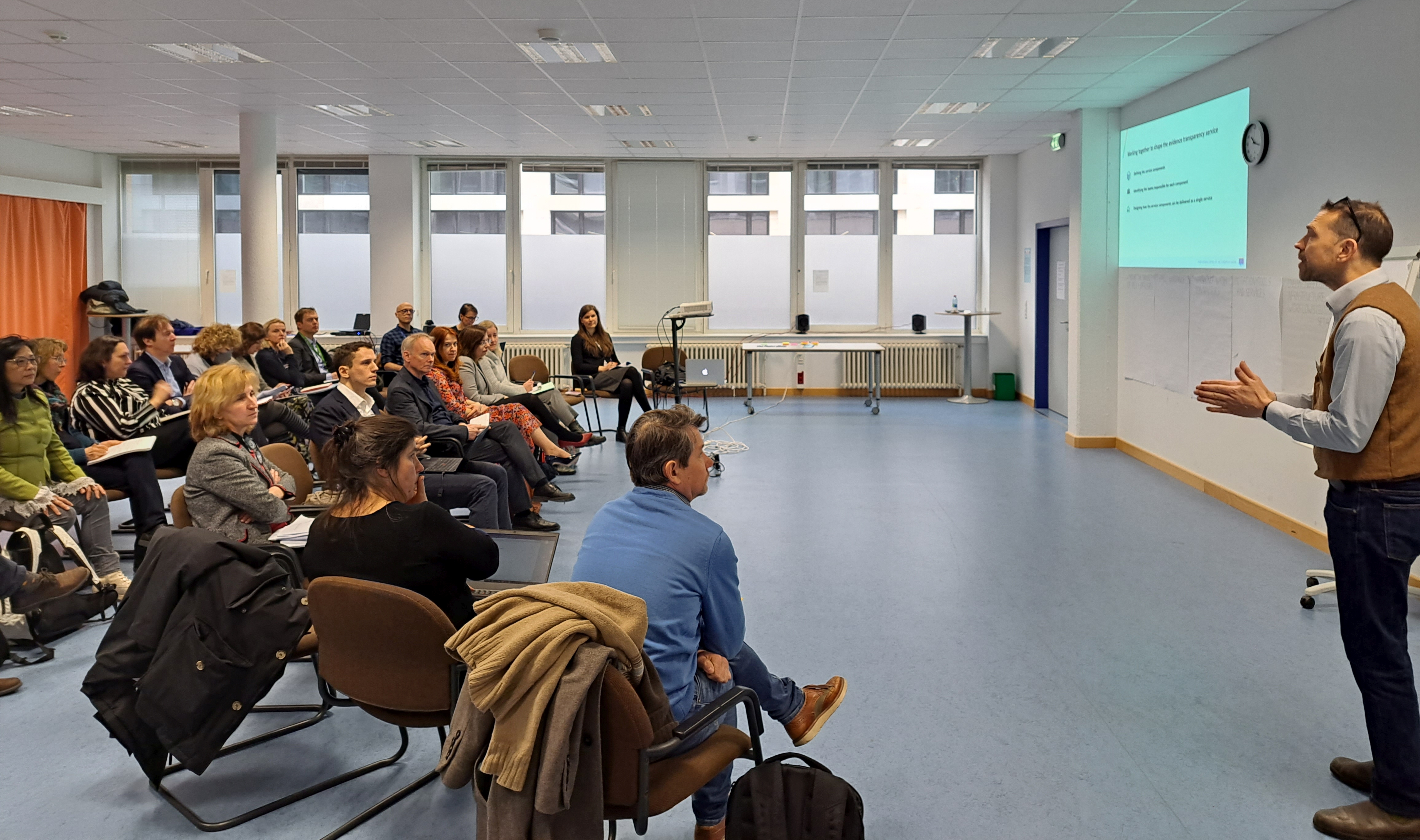
I facilitated a series of workshops with Commission staff across the Joint Research Centre, Publications Office and multiple Directorates. The first workshop mapped evidence types and solutions using a set of structured service cards, each capturing scope, access, format and identifiers for a distinct type of evidence. Participants reviewed, annotated and connected them across a large evidence wall, building a shared picture of what existed and where the gaps were.
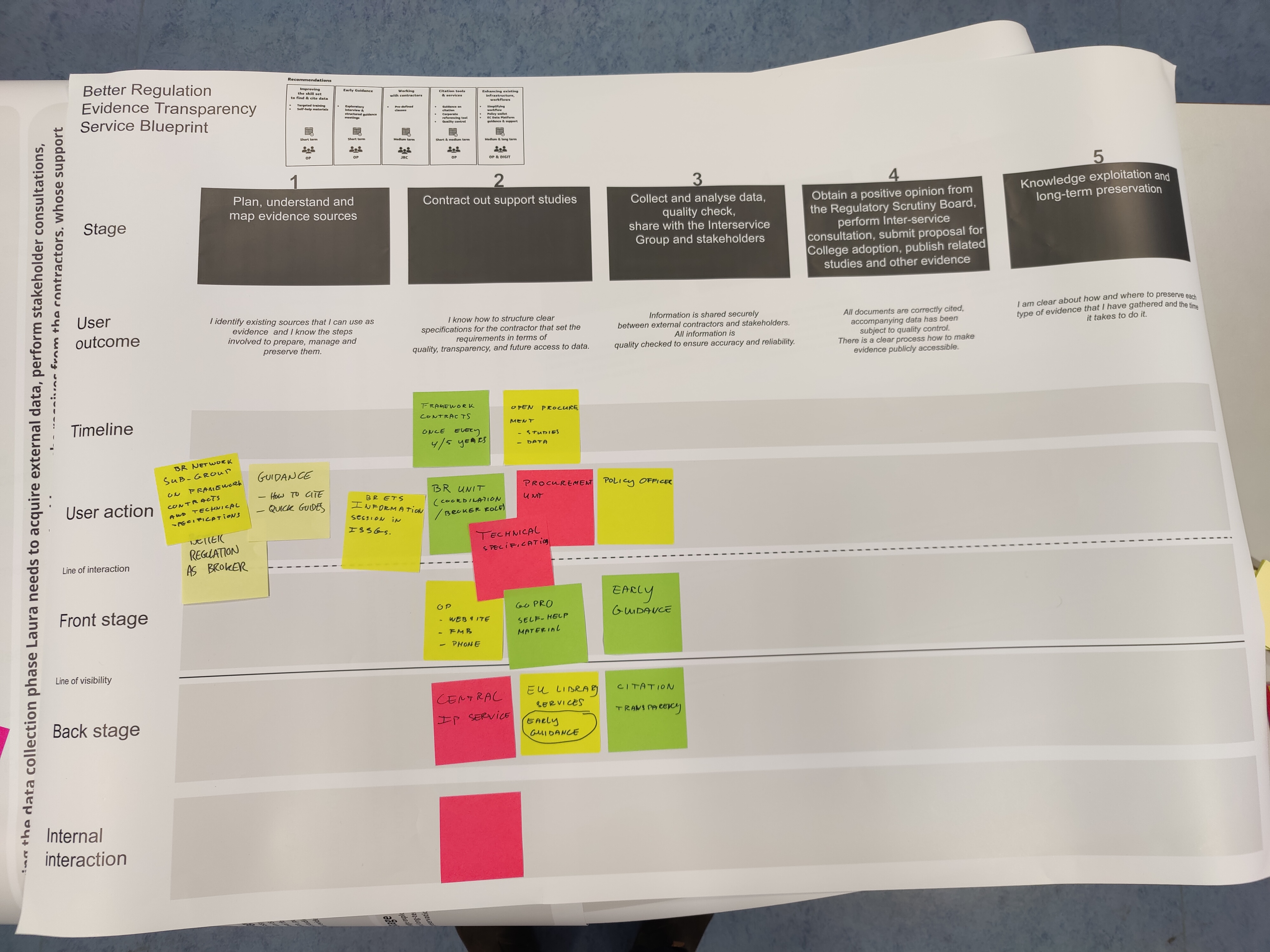
The second workshop focused on defining service components — the discrete things the future service would need to do. Groups worked through five themes: improving policy officers' skills, early guidance, working with contractors, citation tools and enhancing existing infrastructure. I designed the workshop structure and facilitated across all sessions, using a shared service blueprint as a live working artefact that groups annotated and extended during the day.
Visual representations were produced throughout and used as working tools. The digital evidence map captured the full landscape of evidence types, tools and their relationships at a scale no spreadsheet could hold.
The work concluded with a co-designed recommendations report, capturing key findings and a clear set of actions for the next phase of the pilot.
Il Centro Comune di Ricerca della Commissione Europea stava sperimentando un nuovo approccio alla trasparenza delle evidenze — rendere le prove alla base delle decisioni della Commissione più aperte, strutturate e accessibili. La sfida era tanto organizzativa quanto tecnica: come allineare un gruppo distribuito di ricercatori, specialisti di policy e staff tecnico attorno a un modo di lavorare condiviso?
Ho facilitato una serie di workshop con il personale della Commissione attraverso JRC, Ufficio delle Pubblicazioni e diversi DG. Il primo workshop ha mappato i tipi di evidenza e le soluzioni usando un set di schede di servizio strutturate. I partecipanti hanno esaminato e collegato le schede su un grande muro, costruendo una visione condivisa di ciò che esisteva e dove si trovavano le lacune.
Il secondo workshop si è concentrato sulla definizione dei componenti del servizio. Ho progettato la struttura del workshop e facilitato tutte le sessioni, usando un service blueprint condiviso come artefatto di lavoro che i gruppi hanno annotato durante la giornata.
Le rappresentazioni visive sono state prodotte lungo tutto il percorso — non come decorazione ma come strumento di lavoro. La mappa digitale delle evidenze ha catturato l'intero panorama di tipi di evidenza, strumenti e relazioni a una scala impossibile da gestire in un foglio di calcolo.
Il lavoro si è concluso con un report di raccomandazioni co-progettato, con i risultati chiave e un set chiaro di azioni per la fase successiva del pilota.
user research · housing · local government ricerca utente · housing · governo locale
listening to people
in temporary
accommodation
ascoltare le persone
in alloggi
temporanei
The London Borough of Redbridge needed to understand the lived experience of people placed in temporary accommodation — a population who rarely have a formal voice in the design of the services that shape their daily lives.
I conducted user interviews with people living across different types of temporary housing: private accommodation, hostel and supported accommodation. Insights from the interviews were used to inform improvements to the Housing Needs Service.
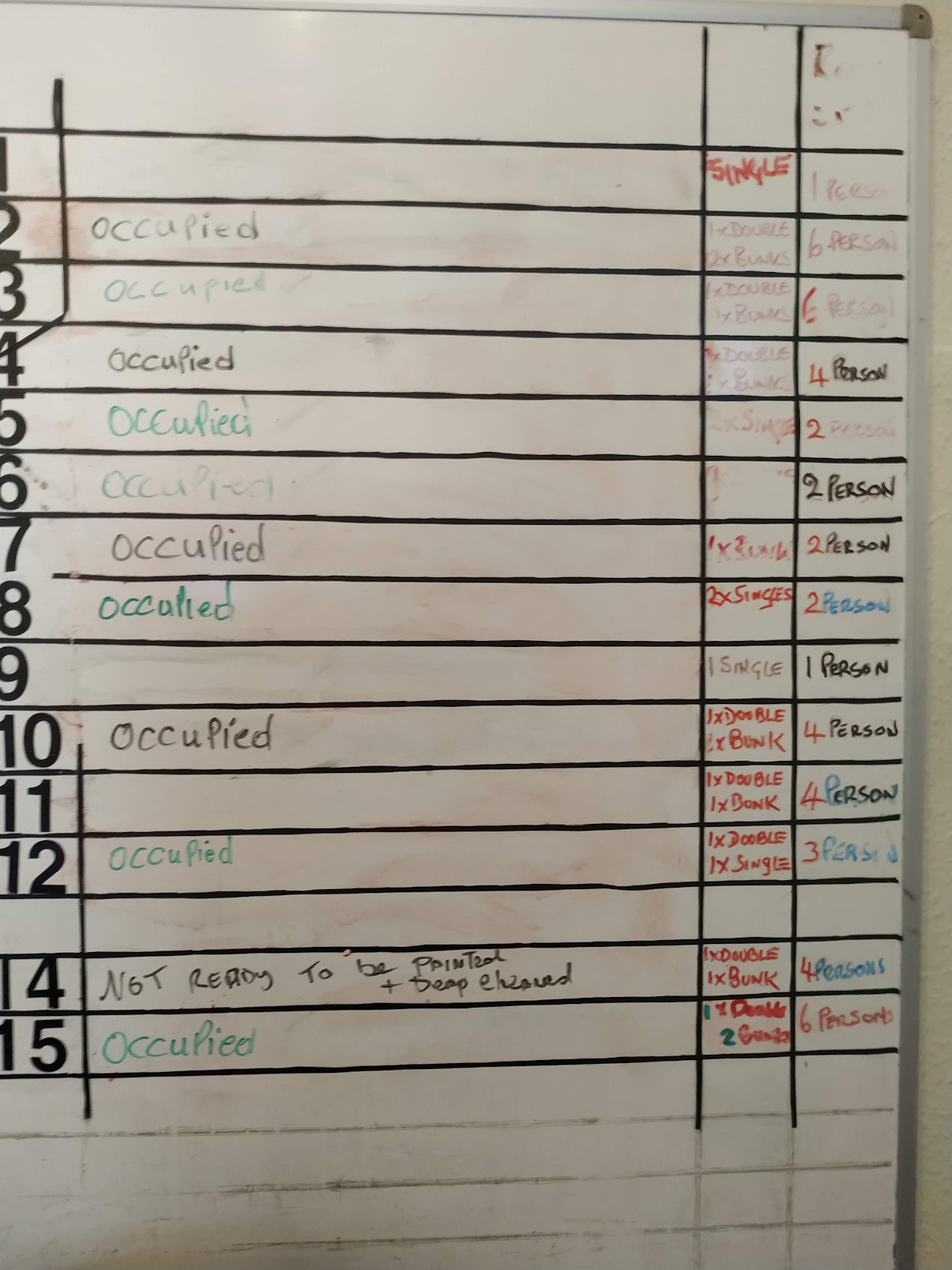
In between interviews I documented the temporary accommodation environments — the common parts, the offices, the rooms.
I ran group review sessions with the council team to work through the material together, identifying common themes until shared patterns became clear enough to act on. The output was a set of user needs grounded in what people had actually said, and a service journey map that made the gaps in the current service visible to everyone in the room.
Il London Borough of Redbridge aveva bisogno di comprendere l'esperienza vissuta delle persone collocate in alloggi temporanei — una popolazione che raramente ha voce formale nella progettazione dei servizi che plasmano la loro vita quotidiana.
Ho condotto interviste con persone che vivevano in diversi tipi di alloggio temporaneo: privato, ostello e alloggio supportato. Ogni conversazione era diversa. Le costanti, quando emergevano, erano significative.
Tra un'intervista e l'altra ho documentato l'ambiente — il tabellone degli avvisi, il pannello delle chiavi, la stanza vuota con il materasso ancora nella plastica. Lo spazio fisico comunicava cose che il resoconto ufficiale del servizio non comunicava.
Ho facilitato sessioni di revisione di gruppo con il team del comune per lavorare insieme sul materiale, identificando temi comuni finché i pattern condivisi non diventavano abbastanza chiari da poter essere utilizzati. Il risultato è stato un insieme di bisogni degli utenti e una mappa del percorso di servizio che rendeva visibili le lacune del servizio attuale.
user research · design system · government ricerca utente · design system · governo
a design system
for government
un design system
per
tutto il governo
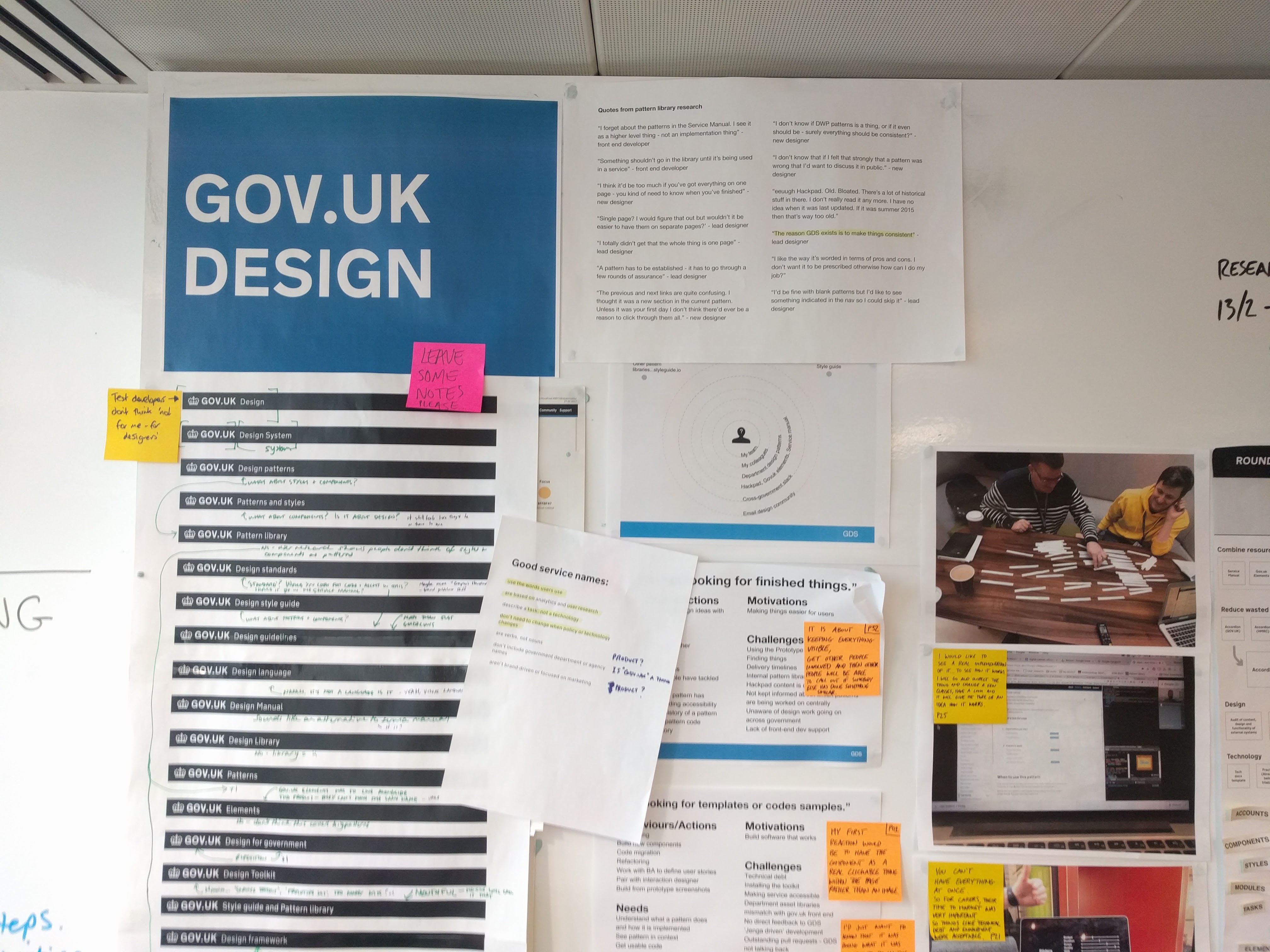
In 2016, Government Digital Service set out to build a shared design system for the whole of UK government — a pattern library that delivery teams across every department could use to build consistent, accessible services.
I worked in two-week research sprints, continuously testing patterns with teams who were actively building services. Card sorting, tree testing and direct shadowing of delivery teams gave us evidence about what worked — and what needed rethinking.
Alongside the design system, I worked closely with a designer to develop new design patterns including the task list and the check-before-you-start pattern, both published on the GDS design notes blog. I also sat on the panel for ten service assessments, reviewing work from departments across government.
The design system passed its alpha service assessment and proceeded into private beta. It is now the GOV.UK Design System, used by teams across the public sector.
Nel 2016, il Government Digital Service si è proposto di costruire un design system condiviso per tutto il governo UK — una libreria di pattern che i team di consegna di ogni dipartimento potessero usare per costruire servizi coerenti e accessibili.
Ho lavorato in sprint di ricerca bimestrali, testando continuamente i pattern con team che stavano costruendo servizi attivamente. Card sorting, tree test e shadowing diretto dei team di consegna ci hanno fornito evidenze su cosa funzionava e cosa doveva essere ripensato.
Parallelamente al design system, ho sviluppato nuovi pattern di design tra cui il task list e il check-before-you-start, entrambi pubblicati sul blog GDS design notes. Ho anche fatto parte del panel per dieci service assessment, revisionando team di dipartimenti di tutto il governo.
Il design system ha superato il service assessment alpha ed è avanzato in beta privata. Oggi è il GOV.UK Design System, usato da migliaia di team nel settore pubblico.
service design · user research · financial services service design · ricerca utente · servizi finanziari
redesigning
mortgages
end to end
ridisegnare
i mutui
da capo a fondo
At AKQA I led a team commissioned by Barclays to review and redesign the entire end-to-end customer experience around their mortgage products — one of the most complex and consequential journeys a customer can undertake with a bank.
We began with senior stakeholder interviews to understand the business constraints and strategic priorities. Qualitative research with mortgage customers gave us a view from the other side: what people actually experienced, where trust broke down, and where the process felt opaque or unnecessarily hard.
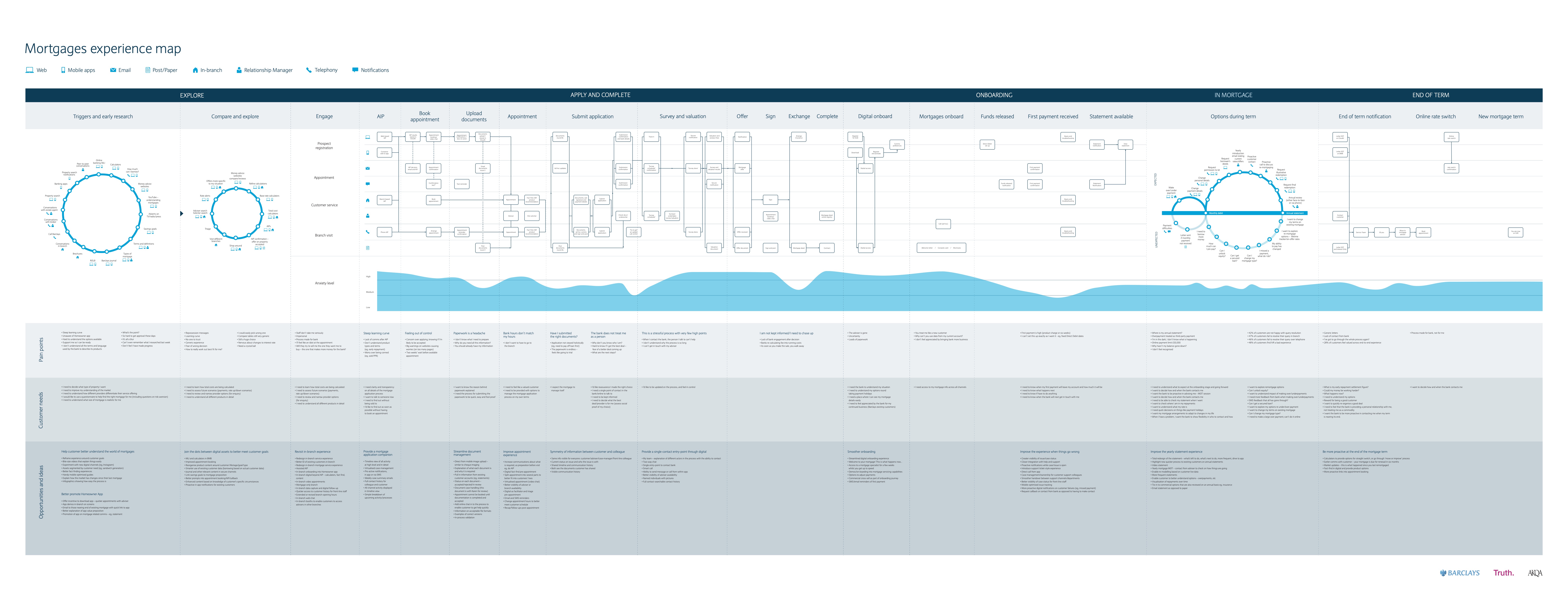
Ideation workshops and co-creation sessions with customers let us test ideas against real expectations before they hardened into proposals. The work concluded with a series of cross-channel experience maps, prototypes, and a prioritised roadmap of improvements across the full customer journey — from first awareness through to post-completion.
In AKQA ho guidato un team incaricato da Barclays di rivedere e ridisegnare l'intera customer experience relativa ai mutui — uno dei percorsi più complessi e significativi che un cliente possa intraprendere con una banca.
Abbiamo iniziato con interviste agli stakeholder senior per comprendere i vincoli aziendali e le priorità strategiche. La ricerca qualitativa con i clienti di mutui ci ha dato una visione dall'altro lato: cosa vivono davvero le persone, dove la fiducia si incrina e dove il processo risulta opaco o inutilmente difficile.
Workshop di ideazione e sessioni di co-creazione con i clienti ci hanno permesso di testare le idee rispetto alle aspettative reali prima che si cristallizzassero in proposte. Il lavoro si è concluso con mappe dell'esperienza cross-canale, prototipi e una roadmap di miglioramenti prioritizzati lungo l'intero percorso del cliente.